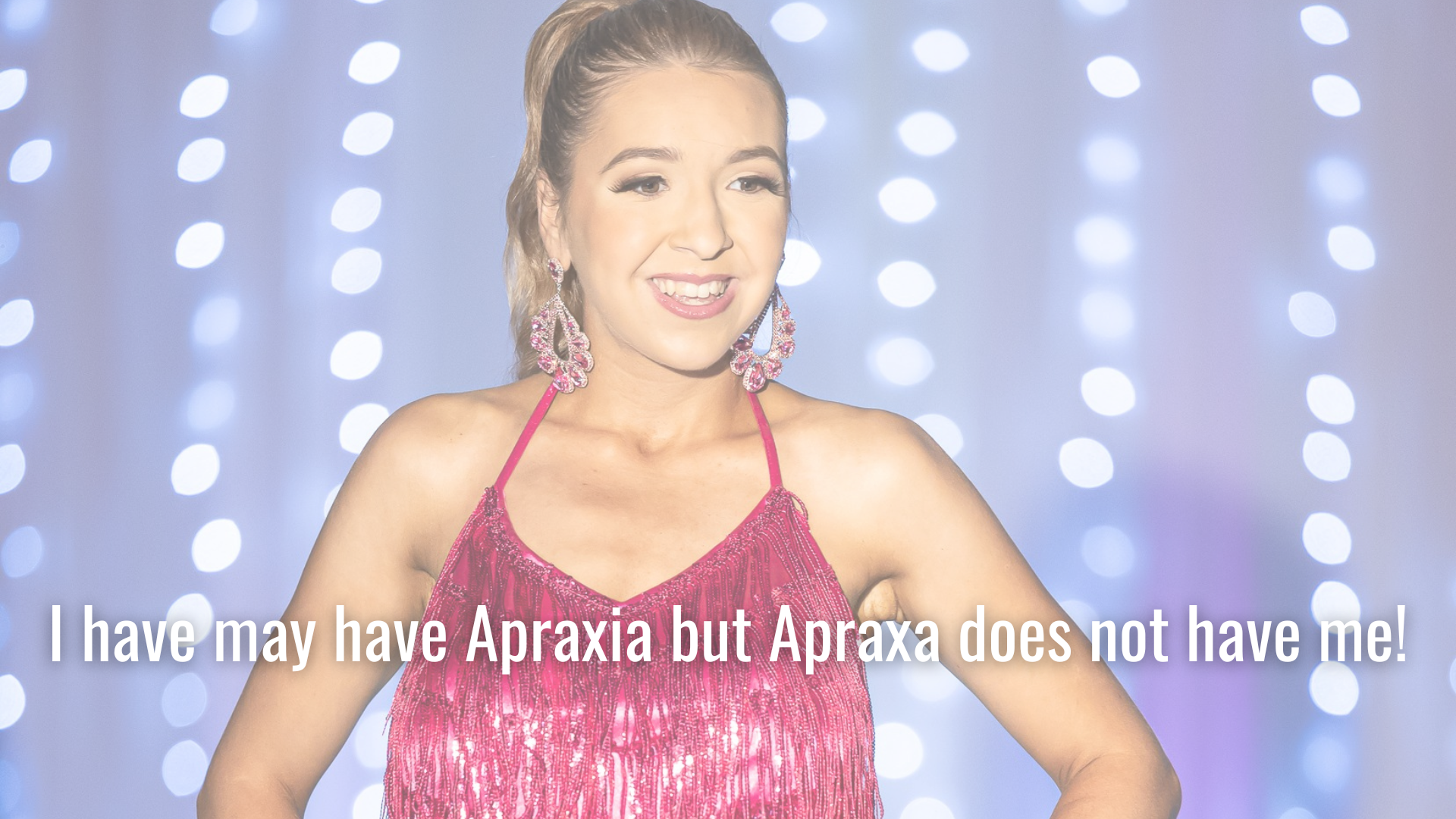
Samantha Sewell
International Model, Pageant Queen & Apraxia Advocate

Back when Samantha was in school Teachers either did not read her I.E.P. (Individual education plan) or did not understand what Apraxia is. Samnatha has created this information document for Teachers and employers who are or currently have a student or employee in their class/workplace with Apraxia of speech. Samantha hopes that Teachers and Employers find this helpful and can help minimize the Anxiety their students/employees may have because of their Apraxia.
What is Apraxia of Speech?
Apraxia is a lifelong neurological speech disorder that causes an error in the pathway from the brain to the mouth. A person with Apraxia knows what they want to say, and what YOU are saying but can’t always get the words out properly.

1-2 Children per 1000 born have Apraxia of Speech
What can Apraxia looks and sounds like?
Apraxia Accent
Older children and adults can often have a permanent voice sound which sounds like a funny accent, sometimes described as sounding Deaf, New York or English Accents.Volume
Individucals with Apraxia have trouble controling there Volume of their voice. They may sound like they are yelling or whispering, when in fact they have no idea they are doing such. Approach this with empathy and be polite when informing. A lot of Adults feel imbarased when this is pointed out to them.Pitch
Individuals with Apraxia can struggle with controlling their pitch, when speaking there pitch may go high or lower then a “regular” voice.Tone
Apraxia can effect an individuals use of Tone, causing them to sometimes sound sarcastic, mad or happy when otherwise. This can cause a lot of Anxiety and trouble when creating relationships with people.Rate
An individual with Apraxiamay struggle with the rate
of their speech. speaking
too fast at time and
to slow at other times.
Symptoms may worsen with Anxiety.
What are some of the Apraxia comorbidity conditions/disorders?
Anxiety
One of the more common comorbid conditions is Anxiety, people with Apraxia are often anxious about confrontation, speeches and their voice sound.Dyspraxia
Dyspraxia is Developmental co-ordination disorder. A condition that effects physical co-ordination. Someone with Dyspraxia will appear very clumsy.Autism
A common myth of Apraxia is that it is Autism. While children and adults with Autism can have Apraxia they don’t always. And people with Apraxia don’t always have Autism.Dyslexia
Some people with Apraxia are known to have Dyslexia, which effects reading and writing.It is important to keep these comorbid conditions in thought. However not everyone with Apraxia has these comorbid conditions, some do, some don’t, some may have other conditions.
How can you support someone with Apraxia?
Learn
Learn some alternate ways to communicate. This shows effort and will help the individual feel loved and included. You can learn ASL, Learn to use AAC Devices, make a picture communication book, anything that will help!Patience
Patience, take time to understand what the person is saying, don’t rush them or try to fill in the blanks (unless they ask).Reassure
If the person has Anxiety, a common condition seen with Apraxia. Give them options to see what they will find comfortable ask questions in private, reassure them they aren’t “in trouble” if needing to meet. People with Anxiety and Apraxia need reassurance.